

The symbolic importance of the cherry tree continued to evolve from ancient times through the 19th century and is still changing, even today.
During the Meiji Restoration, beginning in 1868, the cherry trees symbolized the Japanese soldiers' dedication and devotion to their nation through their sacrificial service. The significance of the cherry blossoms is clearly shown through a statement where the soldiers were told that they shall "die like beautiful falling cherry petals for the emperor." This idea represented the new nationalist goals of Japan. After the Meiji period had ended, a memorial, called the Yasukuni Shrine, was built to honor the fallen soldiers of that period. There cherry trees were planted and it is thought that the blossoms of the cherry trees are there to console the souls of the deceased.
To learn more about the cultural and diversity taught at Fujimini Island, please click here.
To learn more about the cultural and diversity taught at Fujimini Island, please click here.
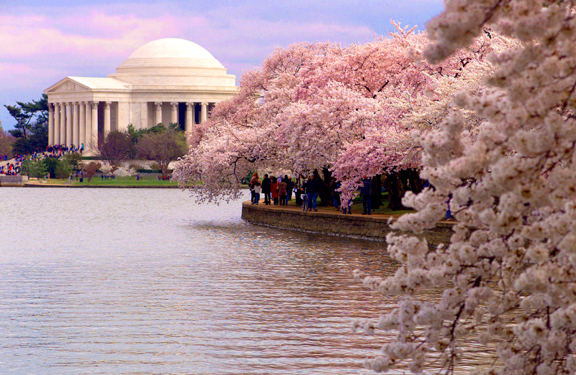
The symbol of the cherry tree continues to grow and evolve alongside the constantly changing nation of Japan. In 1912, the Japanese government sent 3,000 cherry trees to Washington to represent their newly established political alliance. Since the cherry trees were held so dear to the people of Japan, giving the United States the trees communicated their desire for peace and friendship.
As time went on, cherry trees also became a symbol for not only the fallen soldiers of the Meiji period, but also the Japanese soldiers who died during World War II. During the war, in an attempt to preserve the deflating Japanese spirit, vice-admiral Onishi Takijiro painted cherry blossoms on the uniforms of the pilots, as well as on the side of their planes. Each petal that fall from the cherry trees that are planted in the Yasukuni Shrine are said to represent each soldier who died trying to protect his country.

For centuries, cherry trees and their beautiful blossoms have represented the spirit of Japan, filling its people with a sense of nationalism and hope, even when surrounded by death and despair. After the tsunami struck Japan on March 11, 2011, devastating the land and the people, cherry blossoms were used to show people the light and fill them with hope through the dark times ahead.
Has your family received a Nook, Kindle or iPad this year? Find Fujimini Adventure Series award-winning books here. Great family-friendly gifts
Has your family received a Nook, Kindle or iPad this year? Find Fujimini Adventure Series award-winning books here. Great family-friendly gifts


