Sunday, July 28, 2013

The Japanese Tea Ceremony Centers Around the Popular Green Tea


Tea is the most consumed, and one the most popular, beverages in Japan. It also holds a very significant place within their history, tradition, and modern culture. Tea holds such value among the Japanese, that there is even an entire ceremony dedicated to the preparation and serving of tea, the Japanese tea ceremony. Though several different types of tea are included within the ceremony, it centers around green tea- the most commonly consumed type in Japan.

The green tea family is home to five different types of green tea. These types include Matcha, or powdered green tea, Konacha, residual green tea, Hojicha, roasted green tea, Genmaicha, green tea with roasted brown rice, and Ryokucha, the classic green tea. 

Matcha, the powdered green tea, is the main green tea used within the tea ceremonies. This tea allows for only the highest quality leaves. It is prepared by drying and milling the leaves into a very fine powder, then mixing with boiling water.

Konacha, the residual green tea, is made up of tea buds, tea dust, and small leaves that remain after processing. Though considered a lower grade tea, it is still well-liked and considered a great compliment to certain dishes, such as sushi.

The roasted Hojicha tea is loved for its sweet, almost candy-like aroma. This is caused by the heat from the roasting process triggering the leaves to undergo chemical changes. It is also characterized by its distinctive reddish-brown color. 

Has your family received a NookKindle or iPad this year?  Find Fujimini Adventure Series award-winning books here.  Great family-friendly gifts


Genmaicha, or green tea with roasted brown rice, is perhaps the most unique type, serving as a popular alternative to the classic green tea. Its unique flavor is produced by combining of the roasted grains of the genmai brown rice with tea leaves. This mixing is also responsible for its yellowish color.  

To learn more about the cultural and diversity taught at Fujimini Island, please click here.


Even within Ryokucha, the standard green tea, there are different grades of the tea depending on how they were harvested. Gyokuro, is considered to be the highest grade. These leaves are picked during the first round of the harvest and protected from the sun before harvesting. The next highest grade is sencha. These leaves are picked during the first round of the harvest but unlike gyokuro, they are not shaded from the sun. The leaves retrieved later in the harvest season are referred to as bancha, and considered to be a lower grade of tea. 

Wednesday, July 24, 2013

The Significance Behind Japanese Tea Ceremonies


A few weeks ago, I indulged myself with a visit to the beautiful and impressive gardens of Duke University in Durham, North Carolina. Referred to as the "Crown Jewel of Duke University", this site featured acres and acres of breathtakingly stunning assortments of flowers, trees, fountains, statues, and ponds designed to perfection to represent gardens from around the world. 

Without even a hint of exaggeration, these gardens were able to transport me to places far from North Carolina or anywhere I'd ever been before. And one of those places was Asia. One of the several gardens featured was an area dedicated to traditional Japanese and Chinese trees, flowers, and architecture. I was amazed by the little Japanese maples, the Japanese-style bridges, the Bamboo forest, and more. But what sparked the most curiosity, enough so that I felt the need to research it upon returning home, was the model of a traditional Japanese tea house. 

Hearing of these tea houses and even having an opportunity to visit one or two was not enough to satisfy my growing curiosity, I wanted to know more of the deep rooted significance within the culture and the rich history behind these peaceful and aesthetically pleasing establishments.

During my research, I found that Japanese tea houses serve as structures specifically designed to hold their traditional tea ceremonies. The room within the structure is referred to as the chashitsu, which literally translates to "tea room". 

A Japanese tea ceremony is a cultural ceremony involving the preparation and presentation of green tea, or chanoyu. The rigid and traditional steps involved in making and serving the tea are considered an art form, it's performance being called otemae

Has your family received a NookKindle or iPad this year?  Find Fujimini Adventure Series award-winning books here.  Great family-friendly gifts

The seriousness of the ceremony can vary from a simple welcoming of guests, a chakai, to a very formal gathering, a chaiji. A chakai is viewed as a sign of hospitality, that includes "thin tea", or usucha, followed by a small meal. Chaiji is much more formal and complex, lasting up to four hours. These presentations include a full course meal, followed by dessert and a selection of thin tea as well as thick tea, or koicha.   


The powdered green tea was first seen being used in Buddhist rituals within the monasteries. By the 13th century, tea began to be viewed as a luxury and symbol of status among the warrior class. Over time, the ritual and steps associated with the preparation and consumption of tea developed into a very spiritually significant practice involving the sabis and wabis principles, sabi representing the material side of life, while wabi represented the inner experiences of humanity and spiritual life. 

To learn more about the cultural and diversity taught at Fujimini Island, please click here.

Wednesday, July 17, 2013

People Crowd the Streets of Downtown Kyoto During the Annual Gion Festival

One of the most famous festivals in Japan is the Gion Festival, or Gion Matsuri, occurring in Kyoto. This festival, its name deriving from Kyoto's Gion district, stretches over the entire month of July. 

The beloved festival originated as part of an ancient purification ritual to appease the gods responsible for fires, floods, and earthquakes. Now fast forward to today, and though it may not be celebrated as part of a ritual, it is still considered an important aspect of Japanese culture and tradition. 

During this exciting time, Kyoto's downtown area is transformed in anticipation of the three nights leading up to the festival's most celebrated day, the Yamaboko Junko parade. During these three nights, referred to as yoiyama, the streets are lined with carts selling foods like barbecued chicken skewers, traditional Japanese sweets, and many other popular Japanese foods. The girls dress in traditional summer kimonos, or yukata, and walk around carrying with them traditional paper fans and purses. 

Has your family received a NookKindle or iPad this year?  Find Fujimini Adventure Series award-winning books here.  Great family-friendly gifts


Also during these nights, many of the houses located in the old kimono merchant district will open their homes to the public, giving everyone a chance to view a traditional Kyoto residence. As enjoyable as these three nights are, the first one beginning July 14th, they are all purposed to lead up to the main event- the parade. 

The Yamaboko Junko, occurring on July 17th, is the highlight of the Gion Festival. On this day thousands of people line the streets of Kyoto to get a look at the beautiful display of floats that pass by during the annual parade. The most priceless and exquisite Japanese tapestries drape these impressive floats, while dancers and musicians perform a skilled ancient ritual around them.

Smaller, but equally impressive, yama floats follow the larger ones. These represent life-sized mannequins of the ancient emperors, empresses, aristocrats, and deities. 

This parade represents the beautiful collation of art, music, dance, and craftsmanship within Japanese history, tradition, and culture. 

To learn more about the cultural and diversity taught at Fujimini Island, please click here.

Tuesday, July 16, 2013

Thailand Celebrates Each Full Moon With Their Full Moon Party


If you ever have the pleasure of visiting Thailand, make sure to attend one of their famous Full Moon Parties during your stay. 

Each full moon Haad Rin Beach, off the East coast of Thailand, has what the islanders call a Full Moon Party. With these parties you can be sure to expect lots of dancing, food, body paint and glow sticks, and of course- lots of people. Up to 30,000 people are in attendance for each Full Moon Party, so it can get pretty wild. As many as 15 different sound systems are set up across the beach, playing every different type of genre you can imagine. So no matter what type of music you're interested in, there will be something for you!


Has your family received a NookKindle or iPad this year?  Find Fujimini Adventure Series award-winning books here.  Great family-friendly gifts


If  huge crowds and  music isn't your scene, you can still attend a Full Moon Party and have a great time- instead of heading to the beach, check out the bar scene. Haad Rin Beach has some fantastic bars, including the renowned Green Mango Bar. The most popular bars include the Drop-In Bar and the Cactus Bar, which are known for their fabulous drink promotions and fire shows. If you want to grab a bit to eat before you start tipping drinks back, The Floating Bar serves fresh caught crab and oyster, while the Outback Bar offers a relaxed atmosphere and a delicious selection of Thai, Australian, European, and American foods.

The next Full Moon Party is scheduled for July 22nd and then again on August 21st so if you're in the area, or looking for a unique cultural experience, be sure to mark those dates on your calendar! 


To learn more about the cultural and diversity taught at Fujimini Island, please click here.

Saturday, June 22, 2013

A Japanese Specialty Turns into a Cultural Icon through the Ramen Stadium


 If you've ever been exposed to any type of Asian culture, or been a poor college student, you are probably familiar with the beloved Japanese ramen noodles. These noodles have been loved throughout all of Japan since they were first introduced by the Chinese over a century ago.

 This dish has proved so popular that four different categories and countless toppings have been created to please the eager customers' unwavering appetite for the noodles. Microwavable "Instant Noodles" were even created in 1958 by Momofuku Ando, which swept not only the nation, but the world, and became a Japanese cultural icon by the 1980s. Restaurants cover the nation where people can go and watch a Japanese chef whip up his regional noodle speciality. There is even a museum dedicated to ramen noodles, and I recently learned, a stadium as well. 

If you are a sports fan, than the word stadium might conjure up certain images in your head. While the Ramen Stadium in Japan isn't exactly the typical stadium a sports fanatic may picture- it is pretty epic in its own right. 

Eight popular ramen restaurants gather in one location in Fukuoka, Japan to provide the ultimate ramen experience. Your initial reaction might be that eight places serving the same dish seems repetitive, but each restaurant offers a different style of broth and noodles, so you could easily visit each and never eat the same food! 

Has your family received a NookKindle or iPad this year?  Find Fujimini Adventure Series award-winning books here.  Great family-friendly gifts


A souvenir shop has also been added, so when you're done trying the noodles you can go and purchase it from the selection of specialty ramens the store offers! The little shop also offers a Ramen gift pack that you'll only be able to find at this location.

If you ever visit Japan, your cultural experience is not complete without a visit to Ramen Stadium, so be sure to add that to the list of places to go! 


To learn more about the cultural and diversity taught at Fujimini Island, please click here.

Happy ramen eating! 

Wednesday, June 19, 2013

Sushi Day: Appreciating the Beloved Asian Cuisine (Part Two of Two)


ONCEkids Wishes You a Happy Sushi Day!

If you have never before tried the delicious and addicting Asian dish, there is no better time to than on Sushi Day! 

The countless types and styles of sushi make it easy to find at least one sushi dish that will appeal to your taste buds. Since sushi has been loved and consumed by the people of Japan and China for hundreds of years, it is no surprise that over the years several different types of sushi have since emerged. The texture and taste of the different dishes comes from the varying fillings, toppings, and methods of preparation.

The first, Chirashizushi, consists of a bowl of sushi rice that is topped with sashimi and garnishes. Different cooked or uncooked ingredients may be added to the simple and easy-to-make dish depending on the chef or the specifications of the customer. 

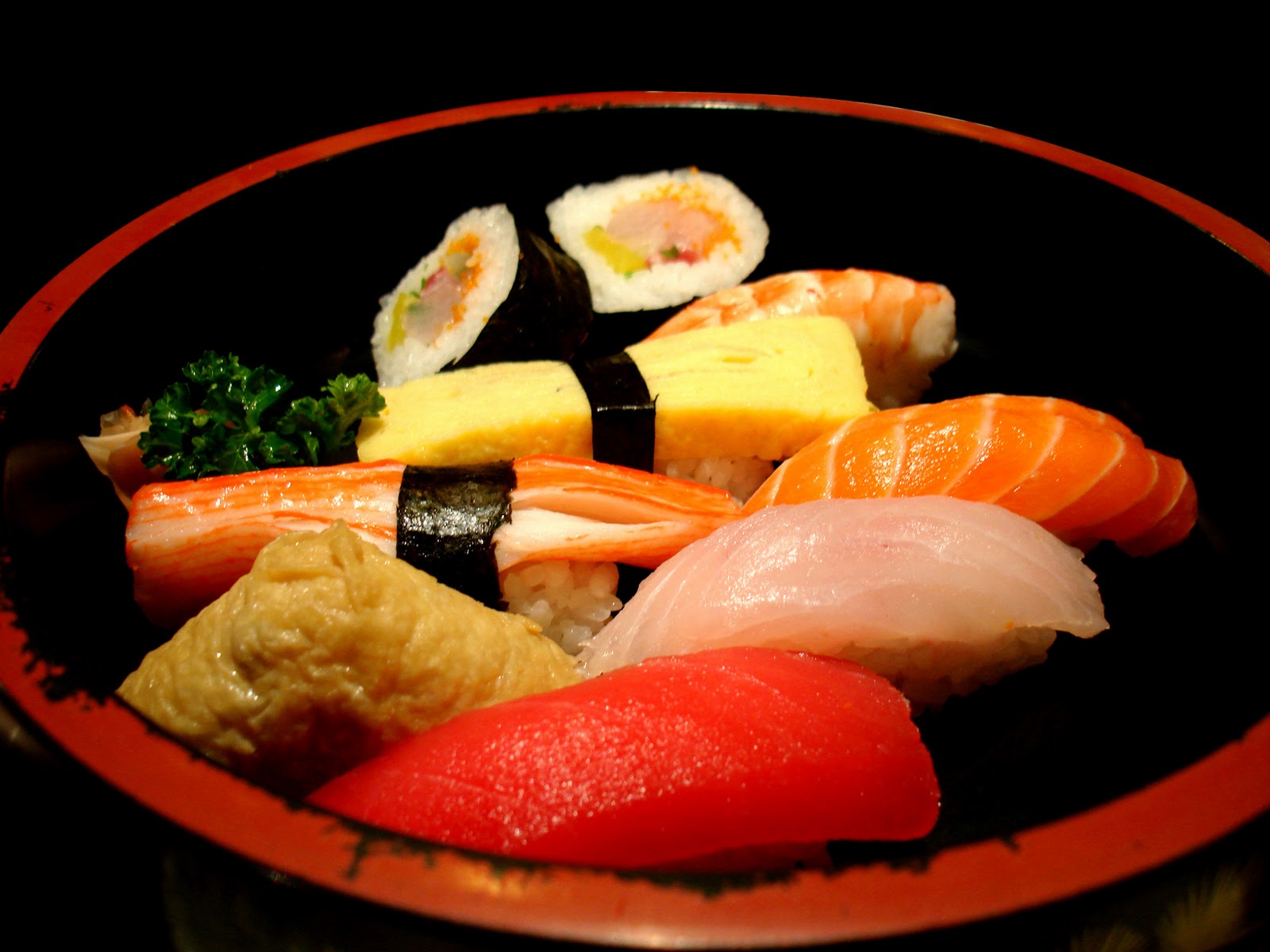
The next type of sushi, called Inarizushi, varies depending on where in the world you are ordering it, but its basic ingredients include a pouch of fried tofu filled with sushi rice. There is a version of Inarizushi that also includes green beans, carrots, and gobo in addition to the rice- this version is specifically a Hawaiian specialty!

Has your family received a NookKindle or iPad this year?  Find Fujimini Adventure Series award-winning books here.  Great family-friendly gifts


Narezushi is the traditional form of sushi, which includes the fermentation process. This complicated but richly traditional process of preparation includes stuffing the skinned and gutted fish with salt, placing it in a wooden barrel, and leaving it there to allow the water seep out. Once six months have passed, the sushi is ready for consumption. Wow, that's dedication! 

The next type of sushi is Nigirizushi, or hand pressed sushi. This variation of sushi consists of a rectangular-shaped mound of sushi rice, with wasabi and a topping of fish draped over it. Typical topping fish include tuna, salmon, or other seafood such as eel or octopus. 

The second to last type of sushi is known as pressed sushi or boxed sushi, or in Japan, Oshizushi. This complex but delicious style of sushi consists of a block-shaped piece formed by a wooden mold, otherwise known as oshibako, lined with toppings and covered with sushi rice. The lid of the mold is then pressed down by the chef to create a compact box. The block is then removed and cut into bit sized pieces. This style of sushi derives from the Kansai region and is a specialty, as well as a favorite, of Osaka

The last type of sushi is the kind that you have most likely seen or heard of before, Makizushi, or rolled sushi. This sushi is typically wrapped in a seaweed covering and cut into six or eight pieces. It can also be wrapped with soy paper, cucumber, or shiso leaves. There are four different variations that have stemmed from this particular style of sushi. These include Futomaki, Hosomaki, Temaki, and Uramaki. These variations come from the different types of fillings and sizes of the Makizushi. 

To learn more about the cultural and diversity taught at Fujimini Island, please click here.

So make sure to pick up some sushi at your local grocery store or head down to an Asian style restaurant to try one of their most delicious dishes! Happy Sushi Eating! 

Sushi Day: Appreciating the Beloved Asian Cuisine (Part One of Two)


Happy Sushi Day! 

Even if it is not necessarily one's food of choice, most people have tried or at least heard of sushi. The love of sushi has been a rich part of Asian culture throughout much of history, since even before the Muromachi period in 1336 AD. 

It was first introduced in Southeast Asia, spreading rapidly through Southern China and eventually to Japan. Its original form is quite different from the sushi we know and love today.

 Historically, the fish is fermented by being wrapped in soured fermenting rice. Once the fish was removed from the rice, it would be consumed while the rice would be thrown out. 

The process for making sushi slowly began to evolve as the dish became increasingly popular. In order to improve the taste and how long the dish could last, vinegar was added to the list of ingredients. 

Has your family received a NookKindle or iPad this year?  Find Fujimini Adventure Series award-winning books here.  Great family-friendly gifts

As time went on, the preparation and the dish itself continued to change. As the vinegar took away from some of the sourness and increased sushi's shelf life, the fermentation process was eventually abandoned all together.

With contemporary Japanese sushi, the fish is freshly caught rather than fermented, which speeds up preparation. This version of sushi was created towards the end of the Edo period, which lasted from 1799 to 1858, by Hanaya Yohei. 


To learn more about the cultural and diversity taught at Fujimini Island, please click here.