Showing posts with label Japanese traditions. Show all posts

Wednesday, June 24, 2015

How the Japanese Celebrate Legends of the Milky Way During the Annual Star Festival

Each year on the seventh day of the seventh month, Japanese people all over the country gather together for what is called Tanabata, or the Star Festival. 

The Japanese festival originates from a traditional Chinese festival known as the Qixi Festival. It is purposed to celebrate the meeting of the deities Orihime and Hikoboshi, who are represented by the stars Vega and Altair. The annual holiday is filled with traditions and rich cultural celebrations, beginning on July 7th. 

Today, people celebrate this day by writing goals and wishes on small pieces of paper and hanging them on decorated bamboo. The various decorations and bamboo sticks are then set afloat on a river or burned after the festivities have concluded. This traditional Japanese custom is similar to Obon traditions, where people place floating paper ships and candles in rivers. There is a range of customs celebrated in Japan today for the Star Festival, depending on the region. In addition to the bamboo sticks, common decorations that can be seen during the holiday are colorful streamers, casting nets called Toami, and Kinchaku bags. The streamers are said to symbolize the “weaving of threads”, the casting net is to bring good luck to farmers and fishermen, and the Kinchaku bag symbolizes wealth.
The festival’s origins can be traced back to the legend of the Cowherd Star (Altair) as well as the Weaver Star (or Vega). The stars were said to be separated by the milky way and only permitted to meet one a year, on the seventh day of the seventh month. Another legend behind the holiday is the tale of Kikkoden, which dates back over 2,000 years ago. The legend says that there was a weaver princess named Orihime and a cow herder prince named Hikoboshi. They fell so deeply in love and were so distracted by one another’s presence that they began neglecting their jobs. The king was so furious that he used the Milky Way to separate them, only allowing them to meet once a year on the seventh day of the seventh month.  

To find the book series that inspires these stories, click here

Wednesday, April 15, 2015

Japan Concludes Golden Week by Celebrating Children’s Day

The Japanese string of national holidays known as Golden Week definitely goes out with a bang, saving one of the perhaps most exciting and most widely celebrated holidays of the week for last. 

Every year on May 5th, children across Japan are celebrated during the holiday, appropriately named, Children’s Day. Although it has only been dubbed a national public holiday by the Japanese government since 1948, the holiday has been deeply ingrained within Japanese culture dating back to the reign of Empress Suiko in 593 A.D. 

Originally, May 5th was named Tango no Sekku and designated for boys, while March 3rd was the holiday for girls. But it has since been changed so May 5th is a day for celebrating all children, both boys and girls. It is a day set aside to celebrate children’s happiness and pay respects to their wonderful little personalities. It is also a day to express gratitude to mothers across Japan who carried and gave birth to the children. For this reason, it is no longer referred to as Tango no Sekku but instead Kodomo no Hi. 

All across Japan, giant carp-shaped streamers can be seeing flying outside of houses to symbolize strength and success. Inside the home, families will display dolls of famous warriors and other beloved heroes. Children are encouraged to take baths sprinkled with iris leaves and roots to promote good head and ward off any evil. And as you may have guessed, the holiday comes with a traditional food as well. No Japanese holiday is complete without a traditional food or drink, and for this holiday that food is kashiwamochi. Kashiwamochi is a rice cake wrapped in oak leaves and filled with a delicious sweet bean paste. 

Countless events are held on Children’s Day to honor children, highlight their talents, promote good health, and of course- to have fun! One event included a performance of Kyogen at the Yokohama Noh Theater, featuring 18 actors between the ages of seven and thirteen. Eager parents, teachers, friends, and family members packed the theater to witness the display of impressive skills that the children had spent nearly a year preparing. 

Kyogen is a type of comic theater that has been around for 600 years and is very important within Japanese traditions and culture. It is performed wearing traditional costumes with very distinct styles of acting. It takes much time, practice, and skill to learn the unique comic expressions, movements and uses of a fan. 


Children’s Day is the perfect way to end Golden Week because it is filled with tons of fun traditions and celebrations that the whole family can love and enjoy. 

Wednesday, June 19, 2013

Sushi Day: Appreciating the Beloved Asian Cuisine (Part Two of Two)


ONCEkids Wishes You a Happy Sushi Day!

If you have never before tried the delicious and addicting Asian dish, there is no better time to than on Sushi Day! 

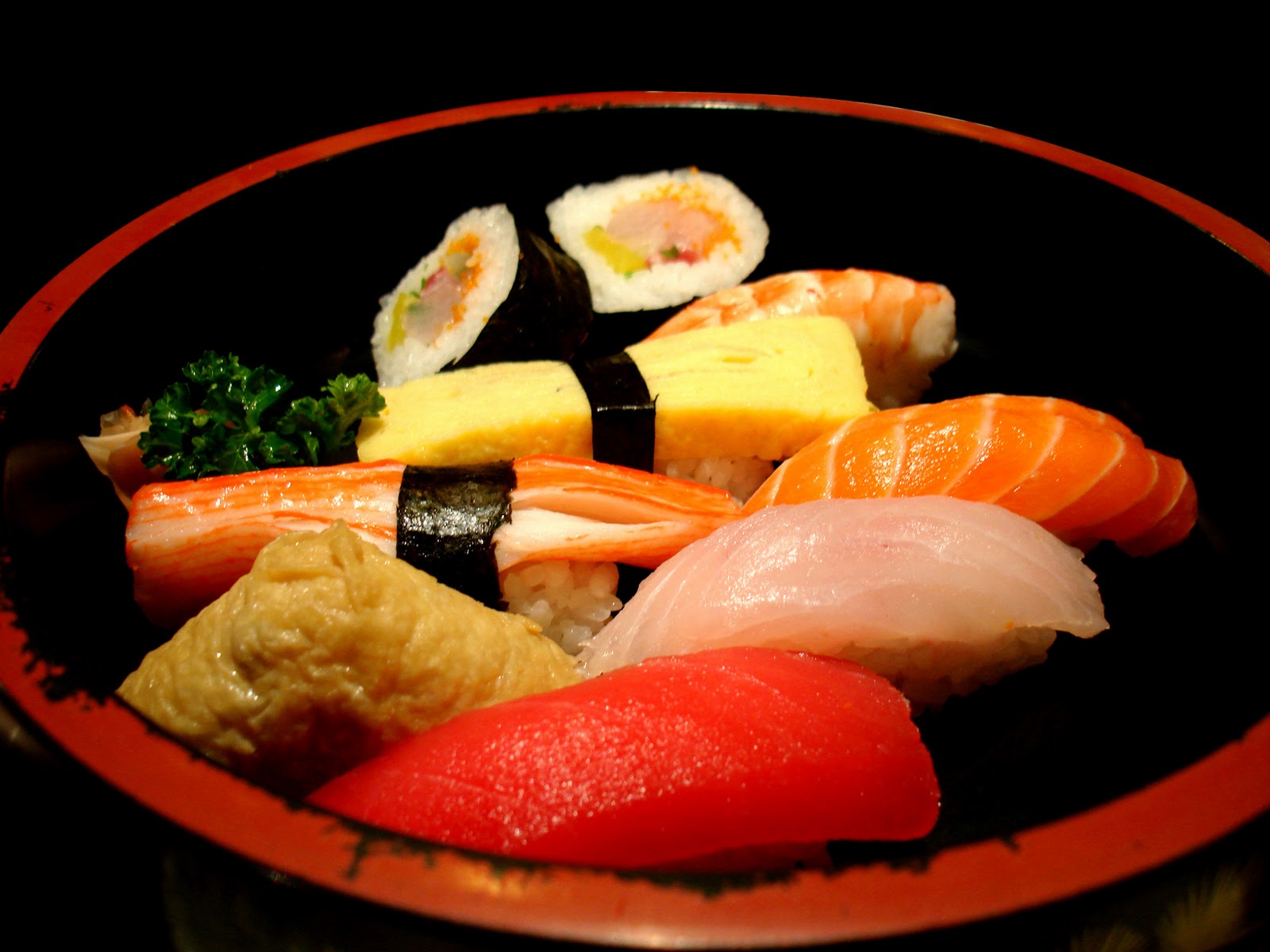
The countless types and styles of sushi make it easy to find at least one sushi dish that will appeal to your taste buds. Since sushi has been loved and consumed by the people of Japan and China for hundreds of years, it is no surprise that over the years several different types of sushi have since emerged. The texture and taste of the different dishes comes from the varying fillings, toppings, and methods of preparation.

The first, Chirashizushi, consists of a bowl of sushi rice that is topped with sashimi and garnishes. Different cooked or uncooked ingredients may be added to the simple and easy-to-make dish depending on the chef or the specifications of the customer. 

The next type of sushi, called Inarizushi, varies depending on where in the world you are ordering it, but its basic ingredients include a pouch of fried tofu filled with sushi rice. There is a version of Inarizushi that also includes green beans, carrots, and gobo in addition to the rice- this version is specifically a Hawaiian specialty!

Has your family received a Nook, Kindle or iPad this year?  Find Fujimini Adventure Series award-winning books here.  Great family-friendly gifts


Narezushi is the traditional form of sushi, which includes the fermentation process. This complicated but richly traditional process of preparation includes stuffing the skinned and gutted fish with salt, placing it in a wooden barrel, and leaving it there to allow the water seep out. Once six months have passed, the sushi is ready for consumption. Wow, that's dedication! 

The next type of sushi is Nigirizushi, or hand pressed sushi. This variation of sushi consists of a rectangular-shaped mound of sushi rice, with wasabi and a topping of fish draped over it. Typical topping fish include tuna, salmon, or other seafood such as eel or octopus. 

The second to last type of sushi is known as pressed sushi or boxed sushi, or in Japan, Oshizushi. This complex but delicious style of sushi consists of a block-shaped piece formed by a wooden mold, otherwise known as oshibako, lined with toppings and covered with sushi rice. The lid of the mold is then pressed down by the chef to create a compact box. The block is then removed and cut into bit sized pieces. This style of sushi derives from the Kansai region and is a specialty, as well as a favorite, of Osaka. 

The last type of sushi is the kind that you have most likely seen or heard of before, Makizushi, or rolled sushi. This sushi is typically wrapped in a seaweed covering and cut into six or eight pieces. It can also be wrapped with soy paper, cucumber, or shiso leaves. There are four different variations that have stemmed from this particular style of sushi. These include Futomaki, Hosomaki, Temaki, and Uramaki. These variations come from the different types of fillings and sizes of the Makizushi. 

To learn more about the cultural and diversity taught at Fujimini Island, please click here.

So make sure to pick up some sushi at your local grocery store or head down to an Asian style restaurant to try one of their most delicious dishes! Happy Sushi Eating!