Showing posts with label families. Show all posts

Wednesday, April 15, 2015

Japan Concludes Golden Week by Celebrating Children’s Day

The Japanese string of national holidays known as Golden Week definitely goes out with a bang, saving one of the perhaps most exciting and most widely celebrated holidays of the week for last. 

Every year on May 5th, children across Japan are celebrated during the holiday, appropriately named, Children’s Day. Although it has only been dubbed a national public holiday by the Japanese government since 1948, the holiday has been deeply ingrained within Japanese culture dating back to the reign of Empress Suiko in 593 A.D. 

Originally, May 5th was named Tango no Sekku and designated for boys, while March 3rd was the holiday for girls. But it has since been changed so May 5th is a day for celebrating all children, both boys and girls. It is a day set aside to celebrate children’s happiness and pay respects to their wonderful little personalities. It is also a day to express gratitude to mothers across Japan who carried and gave birth to the children. For this reason, it is no longer referred to as Tango no Sekku but instead Kodomo no Hi. 

All across Japan, giant carp-shaped streamers can be seeing flying outside of houses to symbolize strength and success. Inside the home, families will display dolls of famous warriors and other beloved heroes. Children are encouraged to take baths sprinkled with iris leaves and roots to promote good head and ward off any evil. And as you may have guessed, the holiday comes with a traditional food as well. No Japanese holiday is complete without a traditional food or drink, and for this holiday that food is kashiwamochi. Kashiwamochi is a rice cake wrapped in oak leaves and filled with a delicious sweet bean paste. 

Countless events are held on Children’s Day to honor children, highlight their talents, promote good health, and of course- to have fun! One event included a performance of Kyogen at the Yokohama Noh Theater, featuring 18 actors between the ages of seven and thirteen. Eager parents, teachers, friends, and family members packed the theater to witness the display of impressive skills that the children had spent nearly a year preparing. 

Kyogen is a type of comic theater that has been around for 600 years and is very important within Japanese traditions and culture. It is performed wearing traditional costumes with very distinct styles of acting. It takes much time, practice, and skill to learn the unique comic expressions, movements and uses of a fan. 


Children’s Day is the perfect way to end Golden Week because it is filled with tons of fun traditions and celebrations that the whole family can love and enjoy. 

Wednesday, February 4, 2015

Getting Ready For the Chinese New Year

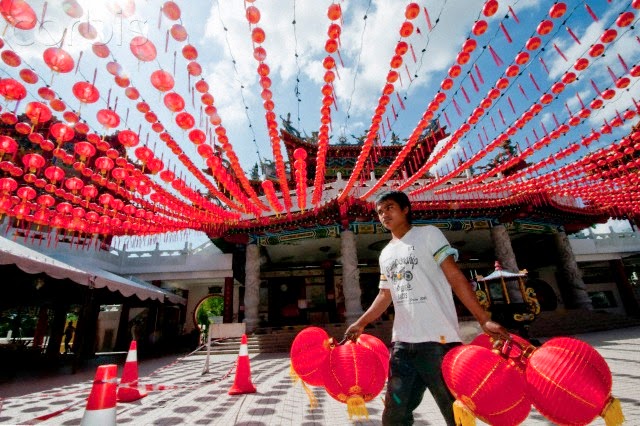
Although Chinese New Year is a few weeks away, Chinese families are already busy preparing for the big celebration. Chinese New Year, also called the Spring Festival, is the most widely celebrated holiday in China- and a holiday this big requires a lot of preparation. For many families, preparation can begin a month ahead of time. The preparation is equally as rooted in tradition as the celebration itself and considered very important- so much so that there are step-by-step guides on how exactly to welcome the New Year. So these are the steps many Chinese families follow in the weeks and days ahead of the holiday, which this year is February 19th, to assure that their celebration goes smoothly and sets the stage for a great new year. 

1. Visit a Fortune Teller
With the holiday comes a new year filled with either good luck or bad, so many people visit a fortune teller to see what the upcoming year has in store for them so they can properly prepare themselves.

2. Clean the house
This is a crucial component of preparing for the New Year. Many hours of cleaning are required to get the house ready for the holiday, believing that cleansing one's home sweeps away any bad fortune. Although cleaning is an important aspect of the New Year's traditions, it is only in the few weeks approaching the holiday where it is necessary- once New Years Eve has arrived it is critical that all cleaning comes to a halt, due to the belief that one the New Year has arrived any further cleaning will sweep away the incoming good fortune. Once the house is spotless, it is tradition to hang chunlian, or paper couplets, in the doorways to encourage good luck to enter the home. 

3. Get a haircut
Not only do you want to start the year off with the right hairstyle, but cutting anything during the New Year celebration (even your hair!) is considered bad luck, so better get out and get it cut now! 

4. Hit the shops
It’s important to go shopping to purchase all the necessary items to make New Year celebrations festive and special. The first items to check off on the list? The food of course! One of the biggest parts of the celebrations are the dishes families prepare for one another. One of the traditional foods you’ll see in many households on the night of New Years are dumplings. Other items to check off the list include new clothes and red envelops. The new clothes (preferably red) are to usher in the New Year and the red envelops are to hold the gift of money that it is custom to give loved ones on the day of the New Year. Once you have treated yourself, it is time to treat your friends and family! The red color of the envelops and clothes is important because red represents good luck, something everyone wants to attract during this time. 


Participation in these cultural rituals will assure any celebrators a happy and luck-filled New Year this February 19th