Showing posts with label celebration. Show all posts

Monday, April 20, 2015

In South Korea, After Children's Day Concludes, May 8th is For the Celebration of Parents

In South Korea, May 5th is a day dedicated to the celebration and appreciation of all the Children in the country, but just three days later it’s the parents turn for some celebration.

Each year on May 8th, people across South Korea celebrate and honor their parents. Though the holiday is not considered a national public holiday by the South Korean government, it is widely celebrated across the country and many people take this day off to be with their families. The holiday is purposed to commemorate all of the efforts parents make when raising their children, physical, social, emotional, and psychological. 

On Children’s Day, parents shower their children with love and affection to show how much they appreciate them and how special they are. So on May 8th, it is parents’ turn to be showered with love and shown appreciation. Parents make tremendous sacrifices for their children, so this holiday is the time for children to give back. 


Today, to celebrate and mark the special holiday, children will set aside the entire day to spend it with their parents- something teens rarely take the time to do. Not only do families spend the day together, but the activities they do are specifically ones that the parents enjoy. Children also give their parents gifts and flowers to demonstrate their gratitude and love. Carnations and roses are the most widely chosen flower for Parents’ Day, to mark the importance of the holiday. 


Tuesday, February 10, 2015

How the World Celebrates Valentine’s Day

Everyone in the United States is aware of how many in this country spend each February 14th, buying flowers, eating chocolate, and pouring your heart out to someone- but did you know that many other countries have their own Valentine’s Day traditions too? Surprisingly, February 14th seems to be a day of love in a large number of places across the world, including Scotland, Australia, Denmark, Britain, Germany, Italy and more. It is very interesting to read about holiday traditions for expressing ones love and affection on this day in other parts of the world and compare them to our own customs. 

In Italy, it was once a custom for couples to formally announce their engagements to family and friends on February 14th- making it a very special day for fiancĂ©es everywhere. To commemorate the special day, stores would be decorated several days in advance and filled with all kinds of sweet treats, especially bonbons, the traditional treat of the holiday. 

Scotland likes to celebrate Valentine’s Day with a huge festival. Present at the festival, there are an equal number of single males and females, all looking for love. Each male writes their name on a piece of paper which is folded and placed into a hat. The ladies are then asked to draw a name from the hat and spend the rest of the festival with the name she selects. After making an acquaintance the man presents the lady with a small gift and the ladies pin a heart shaped piece of paper with the man’s name written on it on to their sleeve. Another Scottish custom or legend says that that the first young woman or man encountered by chance will become that person’s valentine. A common gift exchanged between couples on this day is a traditional love-knot.

In Germany, couples also present their significant other with love tokens on February 14th to show their affection. In addition to the small love tokens, is has become customary for men to buy a bouquet of flowers for their partner on this day.
In some areas of Britain, it is custom to bake valentine buns with caraway seeds, plums or raisins. Another annual tradition includes giving children gifts of candy, money, or fruit after they have sung a special song. Poems associated with Saint Valentine are extremely popular on this day throughout the area, and are thought of as the best romantic versus. Much like in America, cards, flowers, and chocolates have become quite popular gifts for loved ones. 

In Australia, exchanging gifts with loved ones is customary as well, but rather than chocolates or flowers, Australians present their significant others with other types of gifts. Dating back to the Australian gold rush period, minors who found themselves suddenly with large amounts of money had no problem spending a lot of money on their loved ones for Valentine’s Day. From this came some rather extravagant traditional gifts, such as colored shells, satin cushions perfumed and decorated, and maybe even a taxidermied humming bird. 


People in Denmark like to be playful and have some fun on Valentine’s Day rather than be very serious and romantic. There is a custom of sending your beloved what is referred to in Denmark as “a lover’s card”, but it is also tradition to send pressed white flowers, called snow drops, to friends and family members. Many men send valentines called the joking letter, or gaekkebrev in Danish, which contains a poem but no signature. Instead of signing his name, he puts a dot for each letter in his name. The receiver of the card has to guess who sent it, and if she is right she is rewarded later in the year with an Easter egg. 

Wednesday, February 4, 2015

Getting Ready For the Chinese New Year

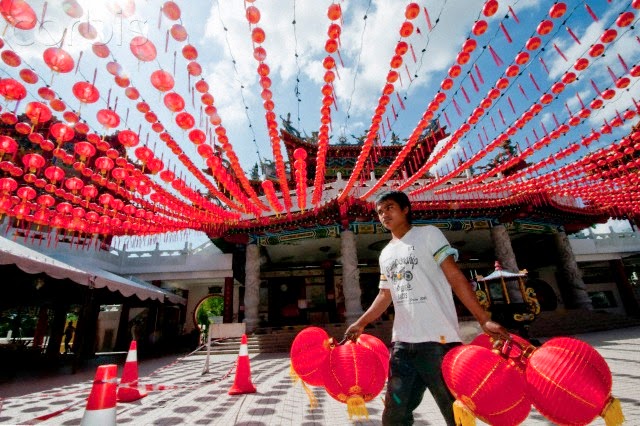
Although Chinese New Year is a few weeks away, Chinese families are already busy preparing for the big celebration. Chinese New Year, also called the Spring Festival, is the most widely celebrated holiday in China- and a holiday this big requires a lot of preparation. For many families, preparation can begin a month ahead of time. The preparation is equally as rooted in tradition as the celebration itself and considered very important- so much so that there are step-by-step guides on how exactly to welcome the New Year. So these are the steps many Chinese families follow in the weeks and days ahead of the holiday, which this year is February 19th, to assure that their celebration goes smoothly and sets the stage for a great new year. 

1. Visit a Fortune Teller
With the holiday comes a new year filled with either good luck or bad, so many people visit a fortune teller to see what the upcoming year has in store for them so they can properly prepare themselves.

2. Clean the house
This is a crucial component of preparing for the New Year. Many hours of cleaning are required to get the house ready for the holiday, believing that cleansing one's home sweeps away any bad fortune. Although cleaning is an important aspect of the New Year's traditions, it is only in the few weeks approaching the holiday where it is necessary- once New Years Eve has arrived it is critical that all cleaning comes to a halt, due to the belief that one the New Year has arrived any further cleaning will sweep away the incoming good fortune. Once the house is spotless, it is tradition to hang chunlian, or paper couplets, in the doorways to encourage good luck to enter the home. 

3. Get a haircut
Not only do you want to start the year off with the right hairstyle, but cutting anything during the New Year celebration (even your hair!) is considered bad luck, so better get out and get it cut now! 

4. Hit the shops
It’s important to go shopping to purchase all the necessary items to make New Year celebrations festive and special. The first items to check off on the list? The food of course! One of the biggest parts of the celebrations are the dishes families prepare for one another. One of the traditional foods you’ll see in many households on the night of New Years are dumplings. Other items to check off the list include new clothes and red envelops. The new clothes (preferably red) are to usher in the New Year and the red envelops are to hold the gift of money that it is custom to give loved ones on the day of the New Year. Once you have treated yourself, it is time to treat your friends and family! The red color of the envelops and clothes is important because red represents good luck, something everyone wants to attract during this time. 


Participation in these cultural rituals will assure any celebrators a happy and luck-filled New Year this February 19th

Sunday, September 7, 2014

How the Chinese Celebrate the Moon During their Second Largest Festival: the Mid-Autumn Festival

This weekend people all over China were celebrating one of China’s biggest festivals, the Mid-Autumn Festival. Only second to the Spring Festival in size and grandeur, the annual Mid-Autumn Festival spans over several days and attracts thousands of participants. Several of the elements of the holiday that creates this enormous attraction, other than the numerous legends associated with it, are the rich history and deep traditions behind it. For centuries the Chinese people have celebrated the fall season and the cycles of the moon, making it all the more special. So this weekend how have the Chinese been celebrating their beloved Mid-Autumn Festival? 

Beginning during the Zhou Dynasty (which lasted from 1046- 256 BC) sacrificial offerings to the moon were a major part of the holiday tradition. The people recognized that the moon cycles played a role in the changing of seasons and thus, affected their autumn harvests. They felt in order to continue having good fall harvests it was necessary to thank the moon for its part. Fast forward to today and sacrificial offerings are a less widespread part of the celebration, only being continued in certain rural areas. 

However, in modern times people still use this time of year to express appreciation of the moon and all it does for us. Family members sit around a table while talking about the wonderful things the moon does for us and why they appreciate its presence. Although it is a more relaxing and less serious custom, its roots are derived from the ancient sacrificial ceremonies of the Zhou Dynasty. 

The offering and consumption of certain foods also has its place in the Mid-Autumn Festival weekend. The food most well known and associated with the holiday is the moon cake. The origins of the moon cake can be traced back to the Yuan Dynasty when messages were passed between army leaders using notes baked into moon cakes. One of the leaders began giving the cakes to his subordinates as gifts around the time of the Mid-Autumn Festival. Since then it became a ritual for families to give each other moon cakes during the festival to signify reunion and the beginning of fall. 


Other foods including watermelons cut into the shape of lotus flowers, grapefruits, soybeans, oranges, and wine are commonly consumed during this special time. 


In addition to appreciating the moon and eating moon cakes, the Mid-Autumn Festival features many other fun traditions and customs. Some of these include burning of incense, traditional Fire Dragon dances, releasing of festival lanterns, stealing vegetables in hopes of finding “Mr. Right”, and many many more. Certain customs differ depending on what region you are in but there is no doubt that they are all equally interesting and exciting. 

Thursday, February 27, 2014

How Japan Celebrates Girls' Day

Excitement is growing throughout Japan in anticipation of one of the nation’s biggest holiday traditions, Girls’ Day. The millennia old celebration, also referred to as Hinamatsuri or the Doll Festival, takes place every year on March 3rd. With all the history and tradition behind this special day comes just as many customs and celebrations. 

One of the oldest, and most important, customs that comes each year with the arrival of March 3rd is the displaying of dolls, a practice that began during the Heian period. The dolls can start to be seen being displayed throughout Japanese homes around mid-February and remain that way until the day of the festival has arrived. It is then customary for many people to participate in an ancient Japanese custom called hina-nagashi, one of the original practices of Girls’ Day. During hina-nagashi people place straw dolls into a boat and cast the boat out to sea, believing the dolls carry the bad spirits away with them. 


The more exquisite dolls do not get put in the boats- sometimes these dolls are passed down through generations- instead they get taken down and put away after the celebrations have come to an end. Although they are put on display in February, it is important that the dolls are taken down no later than March 4th, or it is believed the daughter of the family will get married late. 

And what kind of Asian holiday would be complete without food and drinks? On Girls’ Day customary food makes its way into the celebrations. Traditional foods consumed on this day include hina-arare, crackers flavored with either soy sauce or sugar (which one depends on the region) as well as colored rice cakes, or hishimochi. Chirashizushi, sushi rice flavored with sugar and vinegar then topped with raw fish among other various ingredients, is also a holiday favorite. And for girls seeking a united and peaceful relationship, it is suggested that they consume ushiojiru, a soup, that contains clams still in their shells because a pair of clam shells can fit perfectly together- but only with the original pair. 

In addition to traditional foods, Girls’ Day also brings to the table a customary beverage, shirozake, a Japanese sake made from fermented rice. 

Girls' Day is one of the best ways to get a peek into ancient Japanese culture and tradition passed down through generations of families, so if you ever plan on visiting Japan- be sure to add this holiday to your Japanese experience! 

To learn more about the cultural and diversity taught at Fujimini Island, please click here.

Monday, January 20, 2014

What the Arrival of the Year of the Horse Means For You


The Chinese New Year, beginning January 31st, is one of the most popular and exciting holidays on the Chinese calendar. So what makes it so exciting? Well, besides the festive parties and 15-day-long celebration, what makes the Chinese New Year so exciting and unique is its involvement and correspondence with zodiac signs and animals. Each year welcomes not just a new beginning, but also a new Zodiac animal. And with the arrival of 2014 also comes the arrival of the Year of the Horse. 

So what can you expect for the Year of the Horse? 

The coming of the Year of the Horse predicts much good fortune. It will be a year where your romance and your career will reach a point of harmony and peaceful coexistence, something many of us are happy to learn! The Year of the Horse encourages us to reach out and take advantage of the opportunities that are given to us, instead of letting fear, self-doubt, or lack of motivation get in the way. 

And what about those born during the Year of the Horse? 

If you were born in 1942, 1954, 1966, 1978, 1990, 2002 then your zodiac animal is the horse and this year is your year! So what does this mean for you? 

Foretelling of the Year of the Horse predicts that as a whole, your luck and fortune will fluctuate, don't let knowledge of this upset you- but rather, use it to approach the year with caution, care, and above all, strength. When coming face to face with stressors or challenges, seek help from others and search within yourself to find your strength and motivation. 

 As a Horse, you tend to engage in a little self doubt, often seeking approval or confirmation from others before moving ahead with a project or decision- but let this year be the year you become more confident in your choices. 

2014 is a special year because it is not only the Year of the Horse, but specifically, the Year of the Wood Horse. This is important because in Chinese astrology the "element" of wood increases the philosophy of the sign, deepening and strengthening the positive traits associated with the Horse, including action, optimism, and high energy. 

The Wood Horse is also greatly linked with nature and peace, making the usually restless Horse more calm and stable, increasing your ability as a partner, in the romantic as well as professional sense.