Showing posts with label chinese holidays. Show all posts

Sunday, June 14, 2015

The Chinese Are Getting Ready for this Year's Dragon Boat Festival on June 20th

Father’s Day is right around the corner, but in China another very important holiday is coming up as well. Every year on the fifth day of the fifth lunar month, the Chinese observe what is called The Dragon Boat Festival. Over the years the holiday has required several different names including the Tuen Ng Festival, the Duanwu Festival, and the Double Fifth Festival. For 2015, the fifth day of the fifth lunar month falls on June 20th, which is when the festival will take place. 

As with most Chinese holidays, there are many traditions associated with this festival, one of which is found within the name of the festival- dragon boats and dragon boat racing. Dragon boat racing is a team water sport that has been a part of ancient folk rituals for almost 2,000 years. Racing boats carved to look like dragons began as a ceremonial and religious tradition, but has since become an enjoyable and competitive form of sport and entertainment. 

The timing of the holiday is important as well. It is an ancient belief in China that the summer solstice and dragons are connected by a common energy. The Chinese traditionally connect the sun to a masculine energy and the moon to a feminine energy. Like the sun, dragons are also thought to possess a strong masculine energy. At the summer solstice, the sun is thought to be at its strongest, thus having the strongest masculine energy. Therefore, using the symbol of dragons during the summer solstice is thought to symbolize masculine energy, strength, and power at its highest point. 
Although racing dragon boats is the symbol of the holiday, there are other traditional activities done by families during this time. Some of which include hanging up icons of a mythical guardian named Zhong Kui, hanging mugwort and calamus, taking long walks, and a game of trying to make an egg stand at exactly noon- if your efforts are met with success you are thought to have a year of good luck ahead of you. Like many Chinese traditions, these activities are performed in regards to the ancient villager’s beliefs that they would ward off disease and promote good health and spiritual well-being. 

And of course no Chinese holiday is complete without eating and drinking. The traditional food consumed on the fifth day of the fifth lunar month is zongzi, a Chinese dish made of rice, stuffed with various fillings, and then carefully wrapped in bamboo or reed. Then the zongzi is washed down with realgar wine. 

To find the book series that inspires these stories, click here

Thursday, February 19, 2015

How the Chinese are Celebrating the Chinese New Year (Part Two)

Today is February 19th which means that the long awaited day, Chinese New Year, has officially arrived! Due to the time difference, people in China have already been celebrating for almost a day- and some people kick started their celebrations this past weekend! After the New Years Eve Reunion dinner has concluded and the red envelops have been exchanged, families eagerly await the sound of the midnight bells that will let them know the New Year has arrived. If they somehow missed the bells though, no worries because they certainly wouldn’t of missed the crescendo of fireworks and firecrackers lighting up the night sky the moment the clock struck midnight.

Learn more about Fujimini Adventure Series, the award-winning, multi-cultural family book series by clicking here.


Fireworks and firecrackers are one of the oldest and most important customs of the New Year, but in recent years they have been banned from major cities due to the danger and noise disturbances they’ve caused. But this doesn’t stop people in smaller cities and rural areas from practicing the firecracker tradition. Most families spend the rest of their night enjoying the fireworks show and little children run in the street throwing their miniature firecrackers and quickly covering their ears. 

This day marks the beginning of the Year of the Sheep, a mild and gentle animal that lives peacefully in groups. Last week, Hong Kong leader CY Leung gave a holiday speech, urging people to “be like sheep” during their celebrations this year, in an effort to avoid some of the accidents that have occurred in the past from some hardcore celebrating.  

Chinese families also use this time to give thanks to their ancestors. Many people will burn paper money and sweep the graves of deceased family members as an offering to their ancestors. These customs are a way for families to show their deceased loved ones respect and that they are missing them on this special day. It is also to ask for good fortune and protection for their children during the upcoming year. These customs are performed over the course of the holiday, but they are the most important during the first few days.

Depending on where you live, you might also witness lion and dragon dances during various parades, especially in Hong Kong and Macau.  
One of the most widespread traditions for the first day of the new year is for everyone to wear a new outfit (new clothes for the new year), preferable red in color. Red is the color symbolizing good luck, so it is the most common color seen during this important time. To spread the New Years cheer, people will wish everyone they see, stranger or not, “Gongxi”, which literally means “respect joy”, which can mean greetings or congratulations. 

Wednesday, February 4, 2015

Getting Ready For the Chinese New Year

Although Chinese New Year is a few weeks away, Chinese families are already busy preparing for the big celebration. Chinese New Year, also called the Spring Festival, is the most widely celebrated holiday in China- and a holiday this big requires a lot of preparation. For many families, preparation can begin a month ahead of time. The preparation is equally as rooted in tradition as the celebration itself and considered very important- so much so that there are step-by-step guides on how exactly to welcome the New Year. So these are the steps many Chinese families follow in the weeks and days ahead of the holiday, which this year is February 19th, to assure that their celebration goes smoothly and sets the stage for a great new year. 

1. Visit a Fortune Teller
With the holiday comes a new year filled with either good luck or bad, so many people visit a fortune teller to see what the upcoming year has in store for them so they can properly prepare themselves.

2. Clean the house
This is a crucial component of preparing for the New Year. Many hours of cleaning are required to get the house ready for the holiday, believing that cleansing one's home sweeps away any bad fortune. Although cleaning is an important aspect of the New Year's traditions, it is only in the few weeks approaching the holiday where it is necessary- once New Years Eve has arrived it is critical that all cleaning comes to a halt, due to the belief that one the New Year has arrived any further cleaning will sweep away the incoming good fortune. Once the house is spotless, it is tradition to hang chunlian, or paper couplets, in the doorways to encourage good luck to enter the home. 

3. Get a haircut
Not only do you want to start the year off with the right hairstyle, but cutting anything during the New Year celebration (even your hair!) is considered bad luck, so better get out and get it cut now! 

4. Hit the shops
It’s important to go shopping to purchase all the necessary items to make New Year celebrations festive and special. The first items to check off on the list? The food of course! One of the biggest parts of the celebrations are the dishes families prepare for one another. One of the traditional foods you’ll see in many households on the night of New Years are dumplings. Other items to check off the list include new clothes and red envelops. The new clothes (preferably red) are to usher in the New Year and the red envelops are to hold the gift of money that it is custom to give loved ones on the day of the New Year. Once you have treated yourself, it is time to treat your friends and family! The red color of the envelops and clothes is important because red represents good luck, something everyone wants to attract during this time. 


Participation in these cultural rituals will assure any celebrators a happy and luck-filled New Year this February 19th! 

Tuesday, September 30, 2014

China Honors their History and Culture Through the Celebration of National Day and Golden Week

In China, the arrival of October doesn't only mean autumn weather and color changing leaves, but also the widespread celebration of their country with National Day and their annual fall Golden Week, lasting from October 1st through the 7th. 

The seven day length makes this the longest Chinese public holiday after the Spring Festival, so people love taking this time to travel. It is also a very popular time for tourists to come to the country to witness the display of patriotism, so if you ever want to visit during this week make sure to plan ahead! The much anticipated week is purposed to commemorate the founding of the People's Republic of China in 1949. 

Although the People's Republic of China was technically founded on September 21st of 1949, the ceremony to celebrate this revolutionary formation was held in Tiananmen Square on the first day of October, passing the "Resolution on the National Day of PRC" the following day. Curiously, even though National Day was not declared a holiday until 1949, the term appears within writings and the Chinese language as far back as the Western Jin Dynasty, which lasted from 265-316 AD.

Today, people express their national pride through spectacular parades and parties. The Military Review and Parade at Tiananmen Square is held every five years- with the 5 year anniversaries being smaller parades and the ten year anniversaries very large and more heavily celebrated.

For people across China unable to make it to Tiananmen Square, many of the towns will host their own celebrations. Across China, people participate in flag-raising ceremonies, dancing, watch firework displays, and go to art exhibitions. For lovers of bargains and discounts, the 7-day holiday is one of the best times to shop, so get your wallet ready!

Tuesday, September 2, 2014

The History and Legends Behind China's Mid-Autumn Festival

Beginning this weekend and lasting through September 8th is the Chinese Mid-Autumn Festival. This festival is one of China’s most widely celebrated and “grand”, only second to the Spring Festival. Also named the Moon Festival, the holiday revolves around (no pun intended) both the movements of the moon as well as the beginning of the fall season. 

The annual three day celebration of the moon dates back thousands of years to the Zhou Dynasty (1046-256 BC). The ancient Chinese people began to notice a relationship between the movement of the moon and the changing seasons. And with the changing season came the harvests. This connection sparked the beginnings of custom moon sacrificial ceremonies. A practice where the people would make offerings to “thank” the moon during those critical autumn days. 

During the Tang Dynasty the ceremony began to morph into a more widely celebrated folk festival. While still making offerings to the moon, the people would praise and celebrate the harvests too. 

Due to the length of time this festival has been celebrated and the time in which its celebration began, there are many myths and legends associated with the holiday. One of the most well known of which is the story of Chang E flying to the moon. 

The legend says that during ancient times there where ten suns that surrounded our planet, creating extreme heat and making life on Earth very uncomfortable for those who lived here. But a courageous man named Hou Yi wanted to help the people so he shot down nine of the ten suns. Shortly after his heroic act, he met a woman named Chang E. They fell in love and were happily married until his wife was forced to drink a potion that caused her to float away from the earth and towards the heavens. Hou Yi was devastated and cried her name out into the night sky. Upon looking up, he was amazed to see a figure who looked just like his wife standing on the moon. After this discovery, Hou Yi began to pray and make offerings to the moon in honor of his beloved wife. After the other villagers found out the fate of Chang E, they began to do the same until it became a widely spread custom. 

Other popular legends behind the Mid-Autumn Festival include  Wu Gang Chopping Laurel Tree, Jade Rabbit Pounding Medicine, and Zhu Yuanzhang and the Moon Cake Uprising. 

Keep a look out for part two of the Mid Autumn Festival Series to learn about the traditions and celebrations surrounding the exciting holiday! 

Friday, August 1, 2014

The Legend Behind the Chinese Double Seventh Festival

The Double Seventh Festival, also known as the Qixi or Qiqiao Festival, is a Chinese festival celebrated annually around the beginning to mid August. The name, literally meaning Night of Sevens, comes from the holiday celebrations falling on the seventh day of the seventh month each year.

As with most festivals, there are traditions and rituals surrounding the yearly celebration, specifically for girls and newly weds. Girls make their way to temple to pray  and burn paper in hopes for attracting a loving husband in their future. To pray for a long and happy marriage, newly wed women are encouraged to make offerings of fruit, flowers, tea, and face powder to Niulang and Zhinu, the mythical couple this festival was created for.


This Chinese festival is always one of my favorites to write about because of the legend and mythology behind it. Behind the Qixi Festival is an ancient forbidden love story between Zhinu and Niulang. 


Niulang, a young cowherd, fell in love with the Goddess’ seventh daughter, Zhinu, who fell for instantly for him. They were then married in secret, without the knowledge of Zhinu’s mother. They were happy for many years and had two children. But their happiness was cut short when the Goddess of Heaven found out her daughter had married a mortal and ordered Zhinu to immediately return to Heaven. Niulang tried to follow his beloved wife but was stopped by the Goddess scratching a river in the sky with her hairpin to separate the lovers forever. The only time they were allowed to see each other was on the seventh night of the seventh moon when a bridge forms in the sky to unite them for a single night. This night has since become known as the Double Seventh Festival. 

Thursday, July 31, 2014

Chinese Newly-Weds Pray For a Good Marriage During the Double Seventh Festival

The Chinese are welcoming the arrival of August through the celebration of the annual Qixi Festival. The festival, also known as the Qiqiao Festival, is celebrated by the Chinese every summer on the seventh day of the seventh month, which falls somewhere during early to mid August. Other names for this exciting holiday include the Double Seventh Festival, representative of the holiday’s occurrence on both the seventh day and seventh month. Qixi literally means the Night of Sevens. 

As one can expect with most Chinese holidays and festivals, many traditions and rituals are associated with the Double Seventh Festival. It is celebrated by all Chinese, but particularly important to girls and newly-wed couples. On this day, young girls go to their local temple to pray for wisdom. As they burn paper items as offerings, they wish and pray to marry someone who will be a good and loving husband. 

Newly-weds are to worship and pray to Zhinu and Niulang, the mythological couple the holiday is associated with, for a long and happy marriage. Offerings can be made to the famous couple of fruit, flowers, tea, and face powder. Once the offerings have been completed, half the face powder is to be put on the new bride and the other half thrown on the roof. It is an interesting tradition, but said to bind the woman with the beauty of Zhinu. 


For these couples, the holiday represents the symbol of a successful marriage and shows that the bride is treasured by her new family. 


The Qixi Festival is associated with many traditions but there are century-old legends behind those traditions and celebrations. To learn more about the legend behind the Qixi, or Double Seventh Festival, keep a look out for the second part of this blog! 


Wednesday, January 29, 2014

What's Your Chinese Zodiac Animal Sign? (Part one)

The Chinese Zodiac, also called Sheng Xiao, is a huge component of the Chinese New Year. It is a twelve year cycle that corresponds to the Lunar calendar- and for each different year there is a different animal represented. It is believed that whichever animal sign was being represented during the year of your birth, also represents you as a person- everything from your strengths and weaknesses to your fortune. So what’s your Chinese Zodiac animal sign? 


1. The Rat
Your sign is the rat if you were born in the years:
1924
1936
1948
1960
1972
1984
1996
2008

Your strengths:
People born during the Year of the Rat are typically of high intelligence. Their curiosity and adaptability leads them to achieve a lot of success in life. They are generally personable and quite popular. Their key features associated with the animal include “wit, alertness, flexibility, and spirit.”

Your weaknesses:
With all strengths come certain weaknesses. And the weaknesses associated with lacking in bravery or courage. Their timid nature prevents them from being able to be a leader or taking on a lot of responsibility. Their interests in personal gain and success drives them but also makes them come across as selfish. 
those born during the Year of the Rat include lacking in the ability to command authority and

What does 2014 have in store for the rat?
2014 will be a year of many ups and downs for the rats. They will experience many highs as well as many lows, but it is important that even during the lows rats keep a positive attitude. It is advised for rats to keep a close eye on their health this year, especially regarding intestinal problems. Maintain a healthy diet and make sure to keep up with physical exercise. For any single rats, 2014 is your year for love! For rat couples, make sure to keep calm in conflict and participate in regular communication to maintain a healthy relationship this year.

2. The Ox
Your sign is the ox if you were born in the years:
1925
1937
1949
1961
1973
1985
1997
2009

Your strengths:
Those born during the Year of the Ox are considered honest and patient people. They work slowly and proceed with caution. Their concentration, strong will, and faith makes them not easily affected by what those around them think or do. They are generally quite tenderhearted and good natured people, who follow their beliefs and have strong morals. But above all, the ox values family and tradition. 

Your weaknesses:
The ox is not a good communicator, making them misunderstood and their talents sometimes go undiscovered. They are stubborn and fall back into their old ways instead of being open to change.

What 2014 has in store for the ox:
2014 will not be a year of great fortune for the ox, but do not get discouraged! Though it will not be a year of great successes, it will not be a year of great failures either. Just stay calm and focused and the year should go by smoothly. Those whose sign is the ox should try to get a lot of rest this year and maintain a regular exercise routine. This year, the ox may come across some unkind or overly competitive people at the workplace, but again- stay calm and react wisely in these situations. Although, the ox will not flourish in many ways this upcoming year, it is a good year for the ox to find love and be content with their social life.

3. The Tiger
Your sign is the tiger if you were born in the years:
1926
1938
1950
1962
1974
1986
1998
2010

Your strengths:
Tigers represent bravery and strength. In ancient times, many emperors were compared to tigers, because of their valiance, nobility, and power. Those born during the Year of the Tiger are considered to be well respected people who enjoy a challenge. They are quick, intelligent, and active. Because they speak their mind and are blunt, people find them easy to trust.

Your weaknesses:
The strength and power of a tiger can sometimes come at a cost. Tigers are often short-tempered and can clash with others, especially authority figures. They are very confident in their abilities, almost too confident, which can lead to difficulty cooperating with others.

What 2014 has in store for the tiger:
The beginning of the year will be dull and uneventful for the tiger, but as 2014 progresses, their luck will grow. Tigers will work hard this year, and it will show. This year, tigers can expect some sort of pay raise or promotion. They will be satisfied with their wealth and not accumulate any financial stresses or problems. Singles may find love this year, but overall 2014 may present some romantic road blocks for tigers. If you’re in a romantic relationship, make sure to avoid conflict by keeping communication open. Tigers can sometimes have a wandering eye, so make sure to stay away from that this year. 


To see the rest of the 12 Chinese Zodiac Animals and find which one correlates with your birth year- keep watch for "What's Your Chinese Zodiac Animal Sign: Part 2"!

Monday, January 20, 2014

How the Chinese Prepare for the New Year


With the New Year quickly approaching, the Chinese are very busy preparing their house for the incoming celebrations. Due to the extensive history and culture behind this holiday, many people participate in all the traditional rituals leading up to this special time such as cleaning, shopping, cooking, and more. 

Many hours of cleaning are required to get the house ready for the holiday, believing that cleansing one's home sweeps away any bad fortune. Although cleaning is an important aspect of the New Year's traditions, it is only in the few weeks approaching the holiday where it is necessary- once New Year's Eve has arrived it is critical that all cleaning comes to a halt, due to the belief that after its arrival, any further cleaning will sweep away the incoming good fortune. Once the house is spotless, people hang chunlian, or paper couplets, in their doorways to encourage good luck to enter their home. 

Next, one must go shopping to purchase all the necessary items to make their New Year celebrations festive and special. The first items to check off on the list? The food of course! 

In addition to groceries, one must purchase themselves a new outfit to ring in the New Year, preferably red! Once you have treated yourself, it is time to treat your friends and family! Purchases of gifts and red envelops to put money in to exchange with loved ones are common in preparation for the celebration of the New Year. 

Also, if you are considering getting a haircut anytime soon, it is vital you do it before the New Year has arrived! Why? Because cutting anything, even your hair, is considered bad luck during New Years celebrations. 

Participation in these cultural rituals will assure any celebrators a happy and luck-filled Chinese New Year! 

Thursday, January 16, 2014

The Rich History Behind the Chinese New Year

While we celebrated the arrival of the new year on January 1st, preparations for the Chinese New Year are just beginning! The date of the New Year changes from year to year because it is based off of their Lunar Calendar, and this year the eagerly awaited holiday falls on January 31st. 

Out of the countless Chinese festivals and holidays, this is by far the most celebrated and cherished one. It is a time dedicated to honoring the household, remembering ancestors, and relaxing and celebrating with friends and family. And people really know how to get in the spirit, with celebrations beginning the evening before and lasting up to fifteen days after- sign me up! 

Like with most Chinese holidays, the Chinese New Year is a cultural event filled with rich history and tradition. There is deep legend and mythology behind the beginning of the national public holiday involving a mythical creature the ancient villagers referred to as "Nian". The stories say that this creature would reek havoc through the villages on the first day of every New Year- attacking people and eating livestock and crops. In order to protect themselves from Nian, the villagers began leaving food on their doorsteps each New Year's Eve, in hopes that the distraction of food would prevent further attack to their people. 

To learn more about the cultural and diversity taught at Fujimini Island, please click here.


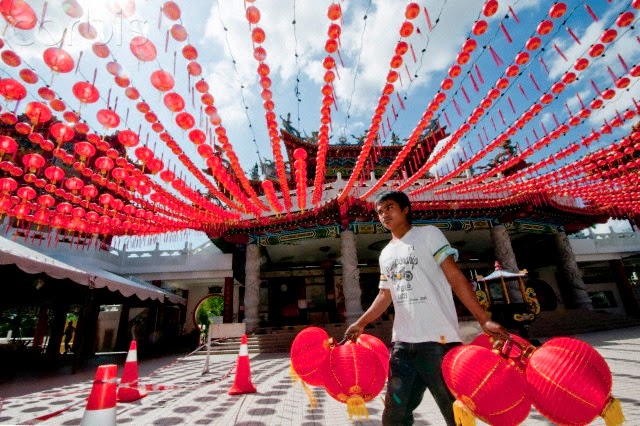
The significance of the color red during the New Year also stems from this same legend of Nian. After the beast was scared away by a child wearing red, the villagers concluded that he was fearful of that color. So from then on, in addition to putting food offerings on their porches, the people would also hang red lanterns and red scrolls on all their windows and doors to ward Nian off. It was only after this act that the ancient creature never again returned to cause harm to the villages and people. 

Sunday, September 22, 2013

The Chinese Welcome the New Season with the Mid-Autumn Festival


Beginning on the 15th day of the 8th lunar month, China welcomes one of its most beloved and anticipated festivals, the Chinese Mid-Autumn Festival. Deeply imbedded with rich Chinese tradition and culture, it has often been dubbed as one of the most important of the traditional Chinese events. Not only that, but it is also one of the most fun and exciting! 

The holiday is also subject to several other titles, including the Moon Festival, Mooncake festival, and the Lantern Festival. 

Three fundamental concepts revolve around this special day; gathering, giving thanks, and praying. These three ideas have been a critical component of the Mid-Autumn festival and carried throughout the centuries since it's origin during the Shang Dynasty. 

One of the most important parts of the festival, as you may have guessed by the different names it's given, is moon worship. In ancient China it was believed that there was a connection between the moon and water that provided you with rejuvenation. Due to these beliefs, it became very popular for women to give offerings and worship the moon on the night after it was full. 

Modern day celebrations still involve offers of rice and wheat being made to the moon, but it also has introduced many new activities over the years. Some of these include parades of lanterns of various sizes, colors, and shapes as well the displaying of handcrafted lanterns, an art form that is heavily emphasized on this day despite its unfortunate decline in popularity in recent years. 

One of the most popular and important activities during the Mid-Autumn Festival is the creation and passing around of moon cakes. Originally, moon cakes were "sacrificed" to the moon during this time as a thank you for that year's fall harvest, since the ancient Chinese people believed the full moon was heavily connected to the changing seasons and
agriculture.  Today, they are still offered to the full moon but also just eaten in celebration with friends and family. The inspiration for the shape of the cakes comes, of course, from the shape of the moon but also from the idea that a circle symbolizes the coming together of family. In addition to enjoying the cakes amongst each other, people also give them as gifts to friends to wish them a long and fulfilled life. 

To learn more about the cultural and diversity taught at Fujimini Island, please click here.